During the last three weeks of this session we will be pulling from everything we've done before: critical analysis of texts, cultural analysis of works, integration and synthesis of works from different eras and cultures, and explication of literary devices. "How will we do this?" you ask? By answering an apparently simple question:
What do Mary Shelley's Frankenstein, Wilfred Owen's "Dulce Et Decorum Est," H.G. Wells's The Time Machine (and The Days of the Comet, and The Island of Dr. Moreau, and Conrad's Heart of Darkness), the Danse Macabre, 1984, punk music (The Clash!), Twitter, Wikipedia, The Wisdom of Crowds, The Starfish and the Spider, DIY, Internet piracy, and podcasting have in common?
Our answer can be as simple and complex as we want, but it will take our understanding of all these cultural phenomena and works and the skills we've acquired this year to pull off a solid answer.
Now that's a cumulative test.
Read More......

I found this site [Warning: The site contains images of dissected frogs that have been implanted with computer parts] while I was researching galvanism yesterday, and forgot to post the link.
Check out the "Project Exhibition Essay" in the middle of the page for the Frankenstein connection.
Remember, I'll be looking over your reading journals tomorrow.
Read More......
Previous post on "How To: Head Your Paper"
MLA Formatting and Style Guide at the OWL at Purdue

Remember, you will be writing over how aspects of Victorian culture may have impacted or brought about the novel you are reading. Look into the life of the writer, the major historical events that came before the book was published, and any other information you can find about the historical background of the book.
Post a comment below or send me an email if you have a question.
Read More......
For those of you reading The Picture of Dorian Gray, here's a bit more insight into the life of the author.
Oh! Here's a graphic version of the novel, by Roy Thomas and Sebastian Fiumara from Marvel. Amazon link.
Read More......
on Mercury Theatre. Check out the Mercury Theatre website for streaming audio and downloadable versions of radio programs from the 1930's.
Hear Dracula, War of the Worlds, Treasure Island, and, at the bottom of the page, an interview with Wells by Welles.
- War of the Worlds audio book here.
- The Island of Dr. Moreau audio book here. (This one's computer-read, not sure of quality.)
Read More......
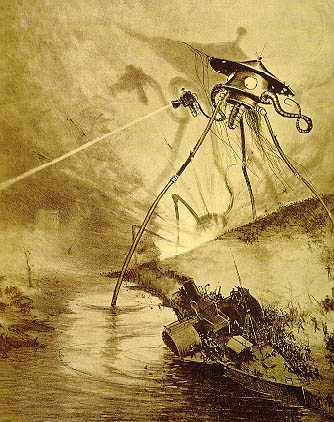 ...talking cats, and broken hearts. I love this unit. I hope you're loving your books.
You met in groups last week, wrote reading schedules, and planned responsibilities for Monday. If you aren't sure what your part is for Monday, email your group or post a comment below.
If you have any questions about your position (or your grade, or any makeup work...), send me an email.
Read More......
1. Go here.
2. Find something cool, bring it to class tomorrow.
3. Choose a book from this period:
- Charles Dickens’s The Adventures of Oliver Twist (1839)
- Charlotte Bronte’s Jane Eyre (1847)
- Emily Bronte’s Wuthering Heights (1847)
- George Eliot’s The Mill on the Floss (1860)
- Charles Dickens’s Great Expectations (1861)
- Lewis Carroll’s Alice’s Adventures in Wonderland (1865) and Through the Looking-Glass (1871)
- Robert Louis Stevenson’s Treasure Island (1883)
- Oscar Wilde’s The Picture of Dorian Grey (1890)
- Oscar Wilde’s The Importance of Being Earnest (1895)
- H.G. Wells's The Time Machine (1895)
- H.G. Wells’s The Island of Dr. Moreau (1896)
- Bram Stoker’s Dracula (1897)—Flip through this before you choose. It’s better than the movies, but not the same.
- H.G. Wells’s War of the Worlds (1898)
- Joseph Conrad’s Heart of Darkness (1902)—More modernist than Victorian, but worth including.
Read More......


